


Salar de Uyuni: The Enchanting Mirror of Bolivia

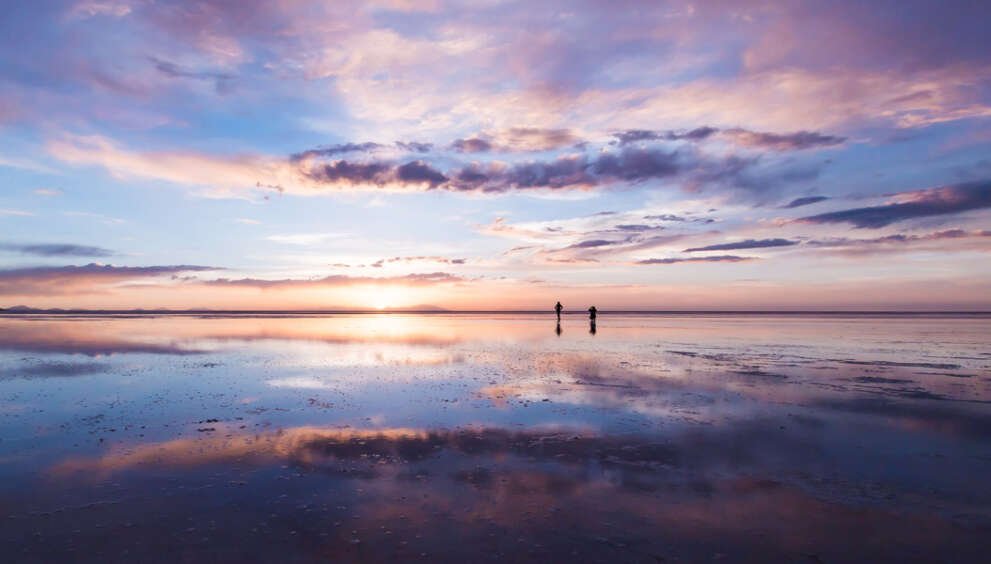
Salar de Uyuni is among the most alienable locations on the planet. This large salt flat is spread across a region of over 10,000 square kilometers in Bolivia in the Andes region, which is above 3,600 meters above sea level. When there is the right time then its surface turns into a mindblowing mirror, reflecting the sky so well that the horizon is found to go. Salar de Uyuni is a natural marvel and also a very emotional experience to various tourists because of its size and magnificence.
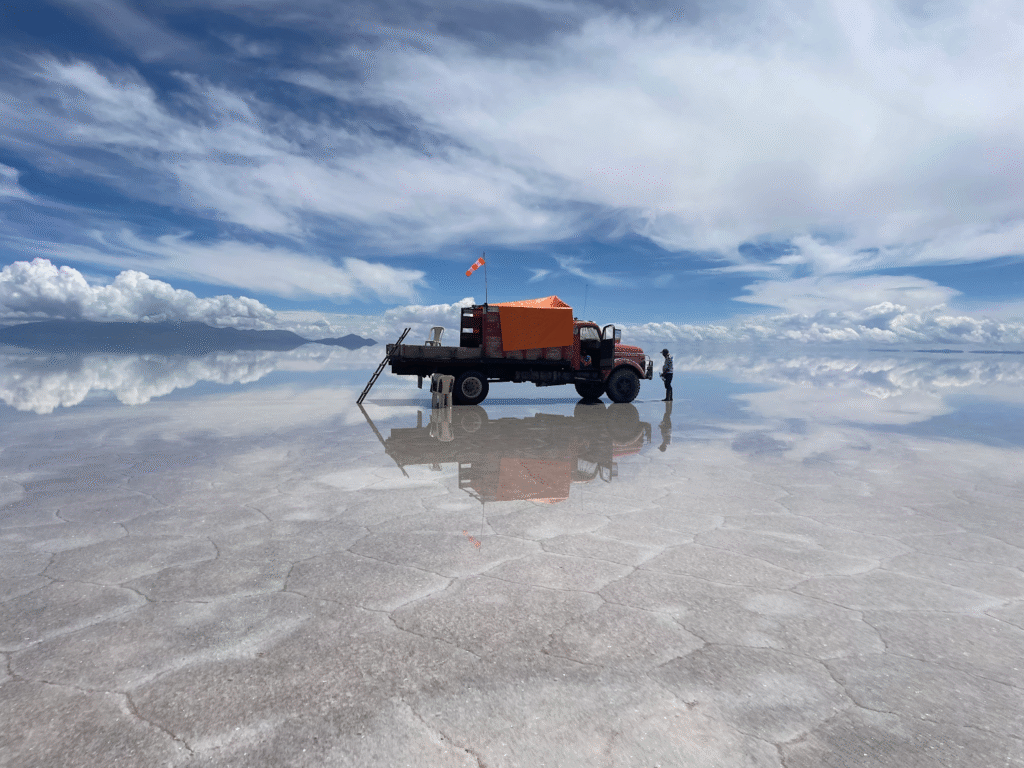
It is as though entering a different world when visiting Salar de Uyuni. The floor beneath is a hard salt crust, which is polygonal in nature, and broken. During the rainy season, a thin layer of water converts the flats into a huge piece of glass. The outcome is a surreal wasteland in which there is the fusion of the sky and ground. During the dry season, the salt is crystallized into a hexagonal form and the whole area forms a glittering white desert that extends to the furthest eye can see.
The Origins and Significance of Salar de Uyuni
Salar de Uyuni was created several thousand years ago when the prehistoric lakes dried up leaving behind dense deposits of salts. Under the crust, there is a thick brine with large volumes of minerals, and one of these minerals is lithium, a vital component of the modern world. The salt flats are not merely useful because of their mineral resource, but due to their ecological and cultural significance as well. The salt harvesting has been a customary practice among local communities in the nearby villages such as Colchani. Colchani is the center of most tours to the salar and even the village displays traditional salt processing and artisan craft.
When to Visit Salar de Uyuni
The time of the visit to Salar de Uyuni will alter the type of experience you will get. In the rainy season between December and April, the cover of the salt crust is covered by a layer of rain water, and the marvelous mirror image of the rainbow is achieved. The way clouds, mountains and the sky are reflected in the water makes it an ideal place to capture a shot and have some tranquil thought.
During the dry season (May to November) there is a dramatic change of color of the landscape. The salt flats are opened up, and the ground hardens. The hexagonal patterns of salt are most apparent at this point and one can easily observe the geometric ground below. Cropping over the flats is also less difficult and it is also easy to travel to far areas like Incahuasi Island, where gigantic cacti are erected on the white salt like sentinels in an enormous desert.
How to Explore Salar de Uyuni
The majority of tourists start at the town of Uyuni, the point of entry to the flats. It has day tours and multi-day trips, which explore deeper into the salt desert and the high altitude sites. A day trip over the salar and to the surrounding sightseeing might be sufficient to those with limited time. To the more adventurous traveler, a 3-day tour has as its course of activities more than the flats, high Andean lakes, geysers and volcanoes.
One of the attractions on these tours is the salt flat, which has an island called Isla Incahuasi which is covered with old giant cacti. The top views are panoramic and they make one feel as though he is on a deserted planet. The Train Cemetery where 19 th -century abandoned steam locomotives rust in the high altitude sun could also be visited by the travelers as a haunting reminder of the industrial past of Bolivia.
In case you intend to visit Salar de Uyuni, you may visit Uyuni by road or air. An apt local airport, which serves the major Bolivian cities, is nearby. local tour agencies provide guided tours, and the drivers can also be cooks, especially in multi-day tours.
What to Expect on the Ground
The salt flat is a physically challenging place to live because of the elevation and openness. The elevation sickness is experienced, particularly by people who are of low elevation. One should take a day or more to acclimatize when possible, and should think about forethought. It is also quite hot at this altitude since the sun reflects on the white salt surface hence one needs to be careful with the sun.
It seems to be like walking on another planet when walking on the salar. The salt crust is also very tough but in some spots uneven. The resulting water layer can be wet during the rainy season, and, therefore, waterproof footwear and protection are essential. Night temperatures are so low during the dry season and the cold sets in and hence the need of warm clothes in layers.
Why Salar de Uyuni Captivates the World
Salar de Uyuni is very poetic. It has provided an endless canvas to play with perspective and illusion to photographers. The white flat plane eliminates any visual point of reference, giving way to artistic shots, where individuals are seen walking on water, floating in space, or towering like monsters over tiny objects. Most of the tourists visit to see the mirror image, and other visitor types are the stargazers; the isolated nature of the site and the elevation have provided spectacular night skies.
In addition to photography, going to Salar de Uyuni is one of the means to get the most of being in touch with nature. Hardly any spot on earth is so pristine, silent and so deep in extent. It also takes you to the local culture of Bolivia including the salt-harvesting communities and their culture.
In another plane, the salt lake plays a key role in the world industry. It is a very significant place because its lithium reserves can be utilized in future to hold the future of renewable energy technology as lithium is utilized in batteries to power the electric vehicles, laptops and mobile gadgets. It is an additional meaning to the place because of this economic and ecological importance.
Planning Tips and Practical Advice
The main thing when traveling to Salar de Uyuni is the reservation of a good local tour. Reliable guides show the way across the land without any troubles and provide valuable information about the history of the area, its geology, and culture. Always carry the correct equipment such as sunscreen, warm clothing, good hiking shoes and waterproof equipment. Due to the elevation, be hydrated, take it slow and have a rest when necessary. An excellent camera is also suggested, because the images are memorable.
Respect the environment. The salt flats are delicate with the local communities having their lives dependent on tourism. Littering should be avoided, use the right routes and be responsible.
Salar de Uyuni is not merely a geographic marvel but it is an area of great beauty, cultural importance and industrial importance. Either you go to see its reflection, to gaze at the stars, to wander through the highlands of Bolivia, whatever it is, the salt flat is a place that you will remember even after you get out of it.
FAQS
What is Salar de Uyuni?
The greatest salt flat in the world is Salar de Uyuni, which is found in southwestern Bolivia. It is more than 10,000 square kilometers in size and its altitude is approximately 3,600 meters.
What is the time of the year to visit Salar de Uyuni?
The flats will reflect the sky which will form a magic mirror especially during the rainy season (December to April). The dry season (May-November) demonstrates the geometrical figures of the salt crust.
Is it possible to investigate the salt flats independently?
The majority of the travelers enroll in guided tours to be safe and to get in-depth knowledge. Tours go through the flats, give local narratives and transport and accommodation where necessary.
Does this worry about the altitude sickness?
Yes, the location is on high altitude. Such symptoms as nausea or headache may appear. Moving slowly, hydration, and acclimation are some of the ways of mitigating the effects.
Where shall I abide over Salar de Uyuni?
In Uyuni town and other villages, there are accommodations. There are hotels of salt that are made of salt providing a unique experience.
What is so special about Salar de Uyuni in the production of lithium?
Under the salt crust, there is lithium-bearing brine that is essential in batteries of modern electronics and electric cars.