


History and Craftsmanship of the Gambeson

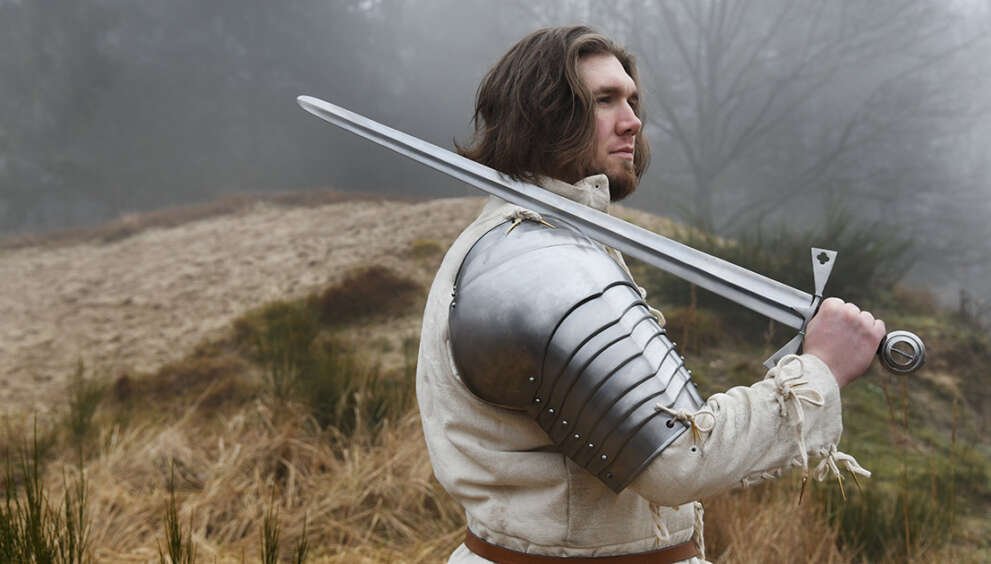
Throughout centuries of human warfare and craftsmanship, the gambeson has stood as one of the most versatile and essential garments ever created. Before the gleam of steel plate and chainmail dominated the battlefield, the gambeson served as the unsung hero of protection, crafted with layers of padded fabric designed to defend warriors from cuts, arrows, and blunt force. Though its origins lie deep in medieval history, this remarkable piece of armor continues to inspire reenactors, historians, and modern artisans today.
What Is a Gambeson?
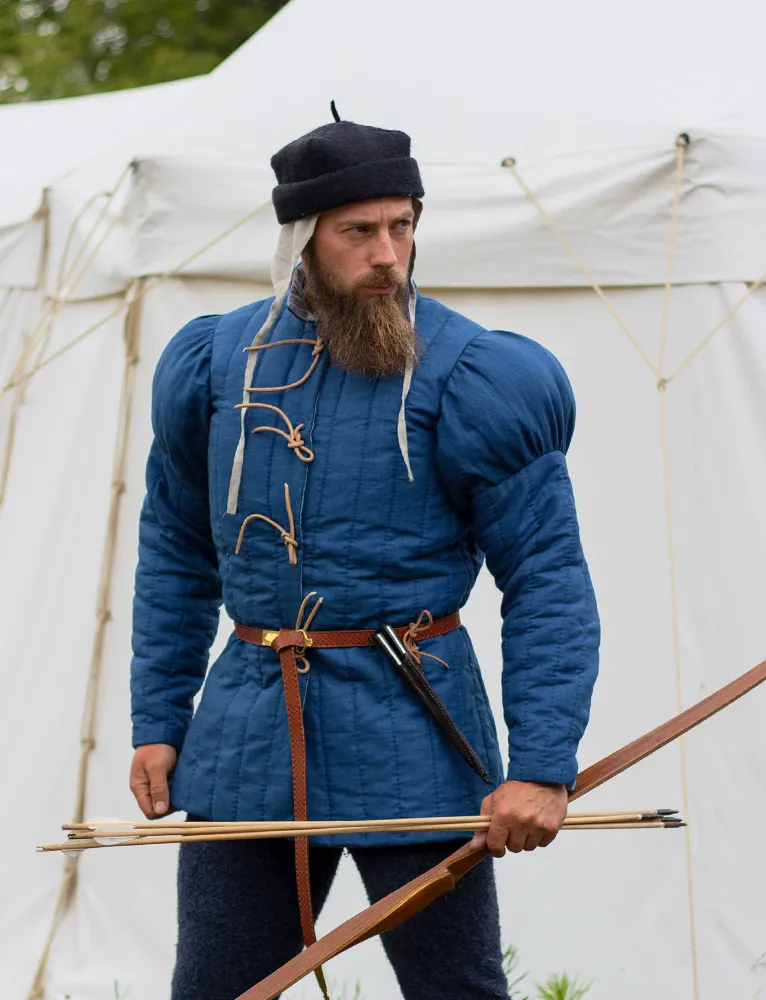
A gambeson is a defensive jacket that was quilted and padded and used by the soldiers in medieval Europe. It used to be constructed of several layers of linen, wool or cotton which were sewn together to form a thick, strong barrier against weapons. A gambeson was either minimum armor or a base armor to be worn by sparsely armed men of that time or worn to provide supplementary protection.
It is the beauty of the gambeson which, with the utility, is to be praised, but its versatility. It was cheap in comparison with metal armor, it was well maintained and it kept one warm during cold campaigns. It was designed in a way that it was comfortable and defensive enough, a perfect combination of both flexibility and safety.
You can also visit the Arms and Armor Collection of The Met Museum to get further information on medieval armor construction as it is a high-authority source that provides a lot of information about armory and craftsmanship through the history
The Origins and Historical Significance
The gambeson is thought to have originated as early as the 10 th century, but other historians indicate that the ancient civilizations must have been utilizing a similar padded garment even as early as the ancient times. The gambeson became a popular foundation of armor worn by European knights and foot soldiers in the course of the Crusades. Its armored form would be able to absorb the hits of arrows or swords blows that would otherwise go through metal armor.
You will frequently find in most of the pictures of war in the middle ages soldiers, with thick, sewed coats underneath, or without any, metal protection–they were gambesons. They served the purpose of infantry who were not able to afford a chainmail or plate armor and needed a good defense.
It was not only armor, but a symbol of the dexterity with which medieval dressmakers had worked. Each work was made to fit, sewn, and strengthened in strategic positions such as shoulders, chest and arm. This made sure that a soldier was free to move and yet be defended in the battle.
To get a detailed historical picture of clothing and armor in the middle ages, the Medieval Europe Collection of British Museum is a great high-DA source.
Craftsmanship and Design
There was a high level of skill involved in making up a gambeson. Artisans would place the sheets of linen or wool, as many as 20 layers of it, and then quilt it, with very thick thread. The pattern of stitching, usually diamond, or vertical lines, served not only to decorate, but to make the padding evenly spread, so as to be durable and comfortable.
Stuffing materials were different in accordance to availability. Certain gambesons were lined with scrap fabric or horsehair and others with raw cotton or wool. The linen was normally used as the outer layers, which was selected due to its strength and breathability. The more affluent warriors would even have silk-lined gambesons or embroidered designs on them to show status and workmanship.
To find out more about historical textiles in medieval armory, visit the Textiles and Fashion Collection of V&A Museum, which is the authoritative source of information concerning materials and workmanship of such garments as the gambeson.
The Gambeson in Battle
The gambeson had a number of uses in real battle. It absorbed shocks and prevented chafing where chainmail would otherwise bruise and break bones, and it absorbed the hits that would otherwise have bruised or broken bones. It served as an important padding when used beneath metal armor. Although a sword may not cut through the steel, the force of impact when it collided would be fatal unless it had the necessary cushioning.
A detached gambeson presented a magnificent protection to soldiers who could not afford to buy armor that was costly. It would shield swings of glancing swords and minimize harm caused by blunt weapons. Historical records include stories of the soldiers who were wearing gambesons which were so thick that they could survive a shot of an arrow shot by a bow at a short distance.
In medieval tournaments, knights would frequently wear gambesons of a vivid colour or embroidered below heraldic surcoats, which was a combination of style and utility. This custom of blending defense and beauty reflects the sense of medieval civilization where the arts and the strength were highly regarded by the people.
Modern Relevance and Use
We do not now engage in conflicts with swords and shields, but gambeson has still acquired a new orientation in the contemporary world. The historical reenactor, martial artists who practice HEMA (Historical European Martial Arts), and medieval living history lovers are some of the common users of it. Most contemporary craftsmen continue to create gambesons in traditional techniques to make sure each article replicates the originality of medieval work.
Besides historical accuracy, the modern gambesons have been developed using modern materials. Others are constructed with light padding, synthetic fabrics or even moisture-wicking fabrics to make them more comfortable in the course of the long sessions of training. However, the spirit is the same, it is a protective, padded garment that is the history and practicality in one.
The person who would like to buy or to know more about authentic gambesons may visit the Medieval Armor Collection of ArmStreet, which is a reputable high-authority online retailer of historical cloths and armor reproduction.
The Symbolism Behind the Gambeson
In addition to its practical use, the gambeson is in itself a representation of strength and flexibility. It is the armor of the common soldier–the simple though sure protection of the difficulties of life. The gambeson in some way represents the essence of protection and it reminds us that it is not necessarily might or metal that can bring strength but rather a meticulous work, preparation and endurance.
The gambeson in literature and film has become a symbol to the storytelling of the middle ages, and is frequently used in historical plays or fantasy epics where the historical accuracy is important. It creates an impression of a realistic approach, which relates the audience to the factual history of the great warriors and knights.
Caring for a Gambeson
It takes time and time to keep a gambeson clean. In the past, these were clothes that could hardly be washed due to their thick nature and the overlaying style. They would be air-dried by knights or soldiers, wiped off, and sometimes hand-washed. The same can be applied to the owners of reproduction gambesons today, where they are recommended to follow the same principles, which include frequent airing and no machine washing so that the stitches and the fabric are not damaged.
To conserve historical garments, the Conservation Department of the Smithsonian Institute offers some useful information on how to take care of the textiles and historical clothes.
Final Thoughts
Gambeson is not only a historical garment but also a symbol of ingenuity, security and creativity of a human being. It remains a story of craftsmanship and courage, so far back on the battlefields of medieval times, as now in reenactment. It is very simple in design but concealed within it is a complex world, to balance comfort and strength, art and functionality.
The gambeson is a monument to our eternal struggle to find the balance between form and functionality, be it as a historical thing, as a part of reenactment armor, or as a piece of anthropogenic art. It tells about the strength of the people who wore it–and those people who still keep its history fresh in their minds.
Frequently Asked Questions (FAQs)
Q1: What is a gambeson made of?
A gambeson is typically made of layered linen, cotton, or wool, padded for protection and stitched in patterns to keep the material evenly distributed.
Q2: Was a gambeson effective in real combat?
Yes, very effective. It could absorb shock, prevent cuts, and even stop arrows depending on thickness and construction.
Q3: Could common soldiers afford a gambeson?
Absolutely. It was one of the most accessible forms of armor since it required only fabric and skilled tailoring, unlike costly metal armor.
Q4: Is the gambeson still used today?
Yes, it’s widely used by HEMA practitioners, historical reenactors, and collectors who appreciate medieval craftsmanship.
Q5: How should a gambeson be cleaned or maintained?
It should be aired out frequently, brushed clean, and occasionally hand-washed gently to preserve its shape and stitching.